


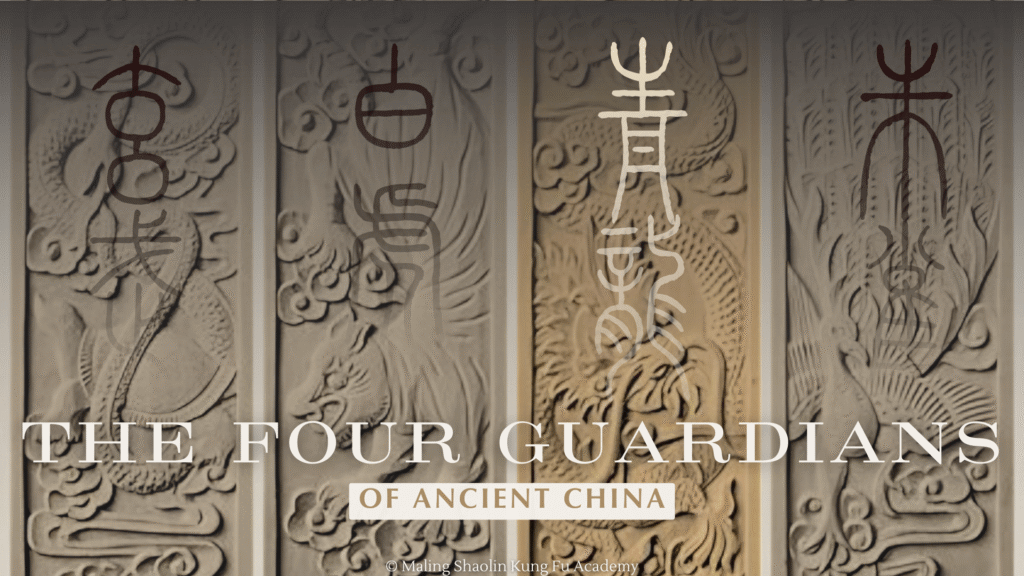
“Left the Azure Dragon, Right the White Tiger; Front the Vermilion Bird, Back the Black Tortoise.” This old Chinese saying captures the mythical compass of ancient China. In legend, the sky itself was divided into four great realms, each guarded by a celestial beast. These are the Four Sacred Guardians – the Azure Dragon of the East, Vermilion Phoenix (Bird) of the South, White Tiger of the West, and Black Tortoise of the North. They are more than mere compass points; each carries rich symbolism, storied origins, and a colorful tapestry of legends that have inspired Chinese culture for millennia. Archaeologists have even uncovered 5,000-year-old burial sites in Henan where clam shells were arranged in the shapes of a dragon and tiger flanking a tomb, hinting that people long ago sought the protection of these beasts even in death. From the starry heavens to imperial banners and temple gates, the Four Guardians loom large in folklore and art. Let’s journey through each of these legendary creatures in turn – hearing the stories they inspire and the meanings they embody – and discover how they’ve stood watch over Chinese imagination from antiquity to today.
Azure Dragon of the East (青龙) – Guardian of Spring and Life
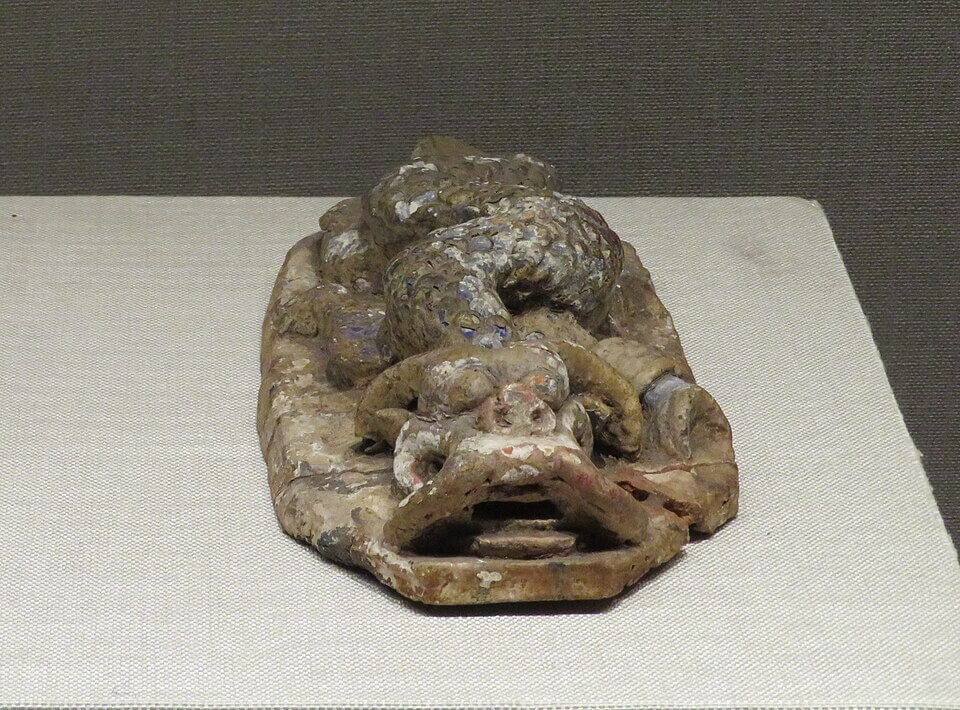
In Chinese lore, the rising sun in the East awakens the mighty Azure Dragon. Imagine dawn light glinting off emerald scales as this dragon unfurls across the sky, bringing the renewal of spring. The Azure Dragon (Qīnglóng) is a symbol of vitality and growth, said to breathe life into the world after winter’s sleep. In fact, ancient Chinese astronomers envisioned an entire quarter of the heavens as this dragon’s domain – a vast constellation of stars forming its sinuous body. As one of the Four Symbols of the sky, the Azure Dragon represents the east and the season of spring, aligned with the element of Wood in the Five Elements system. Its very name, qīng, means a blue-green hue – so it’s often called the Blue-Green Dragon, Green Dragon, or Azure Dragon, evoking the color of spring vegetation and clear eastern skies.
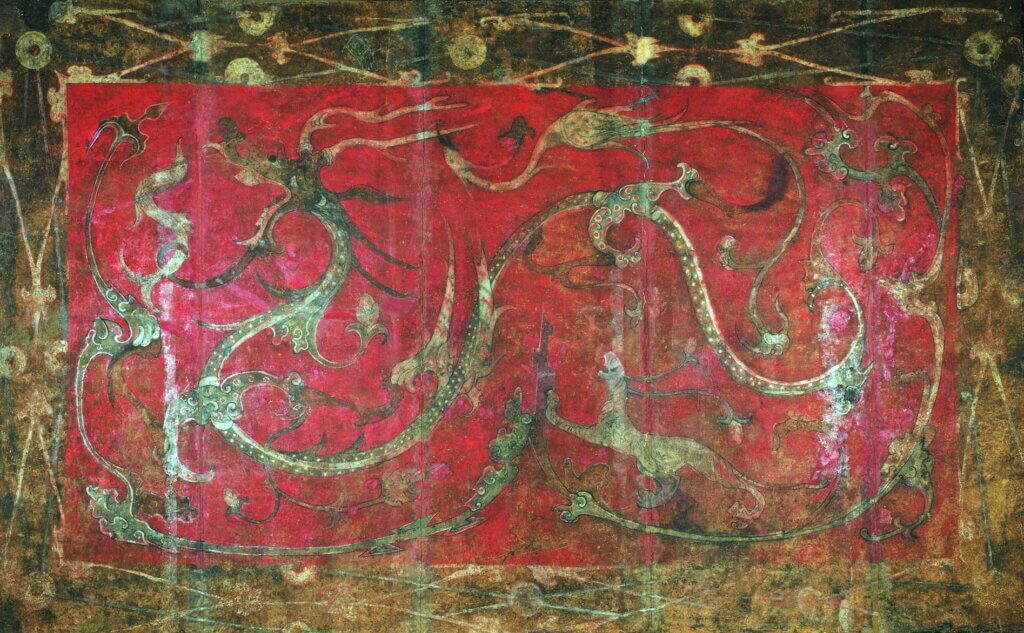
Legends and Origins: According to one origin myth, in primordial times China’s eastern tribe (the Dongyi) revered a dragon totem. They carved images of an azure dragon onto their clan banners, believing a divine dragon watched over them. Over centuries, this totemic dragon grew into a grand celestial deity – the very essence of the East. Another story links the Azure Dragon to China’s early emperors: It’s said the legendary Yellow Emperor rode into battle aided by a dragon, and early emperors were often described as having dragon-like prowess. By the Han Dynasty, the Azure Dragon was firmly established as a cosmic guardian. In the tomb of a Han prince, for instance, archaeologists found a beautiful mural of the Azure Dragon painted on the eastern wall, guarding the rising sun.
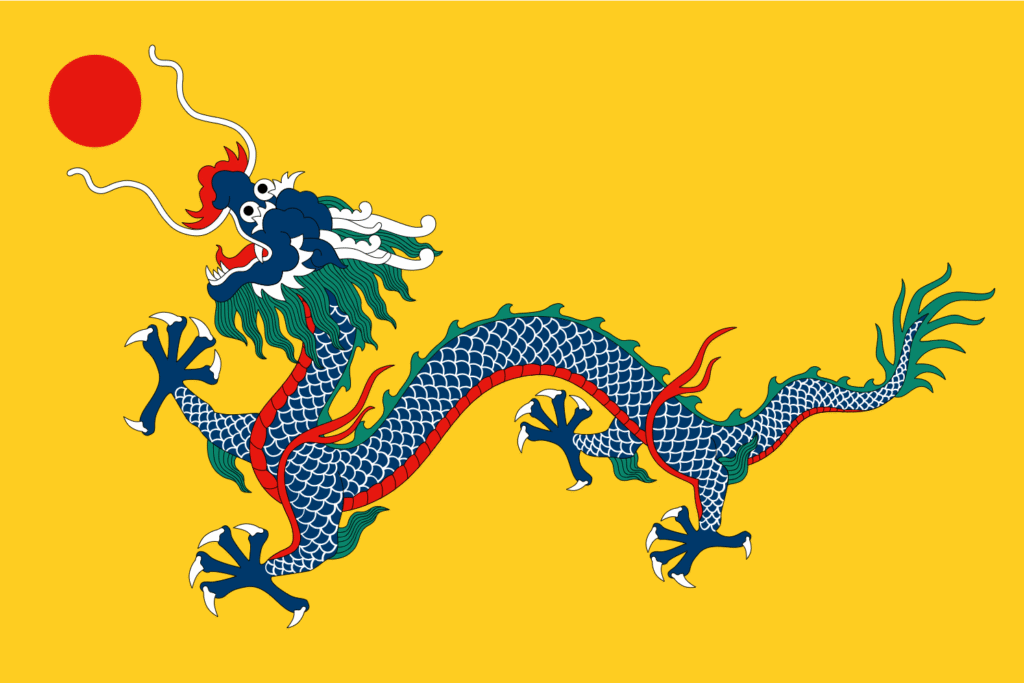
Cultural Significance: The Azure Dragon became a potent emblem of imperial power and heavenly mandate. Chinese dragons in general are seen as benevolent and divine – creators of order from chaos. As the embodiment of the Yang (masculine, active energy), the Azure Dragon represents strength, luck, and nobility. Chinese emperors called themselves the “True Dragon, Son of Heaven,” often wearing dragon robes and enthroning themselves under dragon motifs. In fact, the Azure Dragon even adorned the national flag of China during the late Qing Dynasty (1889–1912) – a vivid blue dragon on a yellow field. This celestial dragon was not just myth but a national symbol of authority.
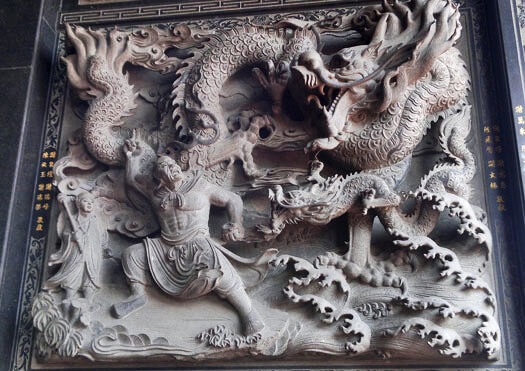
Stories and Legends: While the Azure Dragon is more symbol than character, it does appear in Chinese lore. In Taoist tradition it is personified as Meng Zhang, a deity-general who guards the East. And in one popular tale, the Azure Dragon is associated with Ao Guang, the Dragon King of the Eastern Sea. Ao Guang famously appears in the classic novel Journey to the West – when the Monkey King causes havoc under the sea, Ao Guang battles him and ultimately offers the Monkey King a mighty weapon (the golden Ruyi Jingu Bang staff) to appease him. This story shows the dragon’s proud strength yet willingness to maintain cosmic balance. Dragons are also rain-bringers, and Chinese villages historically performed dragon dances and rituals to summon rain in spring, believing the Azure Dragon’s influence would ensure fertile fields. Through such legends, the Azure Dragon earned a reputation as a protector of the people, governing water and weather to bring prosperity.

Symbolism: Everything about the Azure Dragon exudes life and renewal. It is associated with springtime, dawn, and the east wind – the season and direction where life begins anew. As the creature of Wood, it represents growth and the flourishing of plants. It’s often depicted amid clouds or rain, emphasizing its role in nourishing the land. Even today, the Azure Dragon’s image is used in feng shui and architecture. In traditional geomancy, people speak of the “Azure Dragon on the left and White Tiger on the right,” meaning an ideal home or city should have a protective rise (like a hill or building) on its left/east side and a lower, open area to the right/west. The Azure Dragon’s side must be elevated – a metaphor for raising vitality and luck. This idea was literally built into China’s capital cities: in Beijing’s Forbidden City, the eastern walls and structures symbolically honor the Green Dragon, channeling its auspicious power.
Through the ages, the Azure Dragon of the East has remained a harbinger of good fortune. From the greening of spring hills to the tales of wise dragons aiding heroes, this celestial beast stands for the soul of all living things – a reminder of growth, benevolence, and the eternal return of light each dawn. Whenever the eastern sky brightens or spring rains fall, the spirit of the Azure Dragon is at hand, guarding and renewing the world.