


In traditional kung fu culture, the teacher may be the heart of the school — but senior students are often its pulse. Step into any authentic martial arts academy and you’ll see it: newcomers watching older students, imitating movements, absorbing etiquette, and slowly being drawn into a living lineage.
This mentorship system is not a modern invention; it is a core principle woven through centuries of martial arts history. From the Shaolin Temple to family-style kung fu lineages, knowledge has always flowed in three directions: from master to student, from student back to master through diligent practice, and crucially — from senior student to beginner. Their presence ensures that the teachings stay alive not only in technique, but in culture, ethics, and community.
A Lineage of Transmission, Not Transaction

In the West, we often imagine martial arts training as a one-to-one relationship: teacher and student. But in classical kung fu culture, learning is communal. The senior student stands as a bridge — the person who struggled through the same early stances, who felt the same uncertainty and soreness, who remembers exactly what it takes to build foundations.
Their role isn’t symbolic. It’s structural.
They help beginners refine basic stances. They correct the angle of a wrist or knee before bad habits form. They model respect, posture, and training etiquette. This frees the master to focus on higher-level instruction, preserving the teacher’s energy while strengthening the school’s foundation.
Why Seniors Teach
For beginners, the benefits are obvious — clarity, encouragement, guidance. Beginners often feel overwhelmed with new terminology, complex stances, unfamiliar movements, and intense conditioning. A senior student can slow down and explain basics in a way that clicks. When a new student sees a senior perform with power, calm, and grace, they feel inspired—not intimidated, but encouraged. Seniors also remind new students of the value of patience: “I was where you are. Keep going.” That kind of support is priceless.
But the greatest transformation in teaching often happens in the senior students themselves.
Teaching forces precision. Explaining a movement requires not just doing it, but understanding it. Leadership in the kung fu hall is not based on rank alone — it is earned through patience, humility, and contribution to others’ growth.
In a world obsessed with personal gain and competition, this quiet culture of mentorship stands in contrast — a reminder that real kung fu is as much about character as it is about skill.
More Than Technique — A Cultural Transmission

Senior students don’t just pass down movements; they pass down mindset. They ensure rituals don’t fade. They model discipline during warm-ups and humility during sparring. When seniors invest in juniors, they become pillars of the academy, not just attendees. They help guard the school culture.
They remind newcomers:
- Bowing is respect, not submission
- Basics are the root of mastery
- Progress takes time, not shortcuts
The master plants the seeds.
Senior students tend the garden.
Where Martial Arts Meet Humanity
A great kung fu school is not built by the master alone — it is sustained by its community. When a senior student pauses their own training to help a struggling beginner, they embody one of the highest values in Chinese martial culture: 胸怀 (xiōnghuái) — a generous heart.
The training hall becomes more than a room with mats and weapons racks. It becomes a place where iron sharpens iron — and where wisdom flows from those who have walked farther down the same road.
The Master’s Role
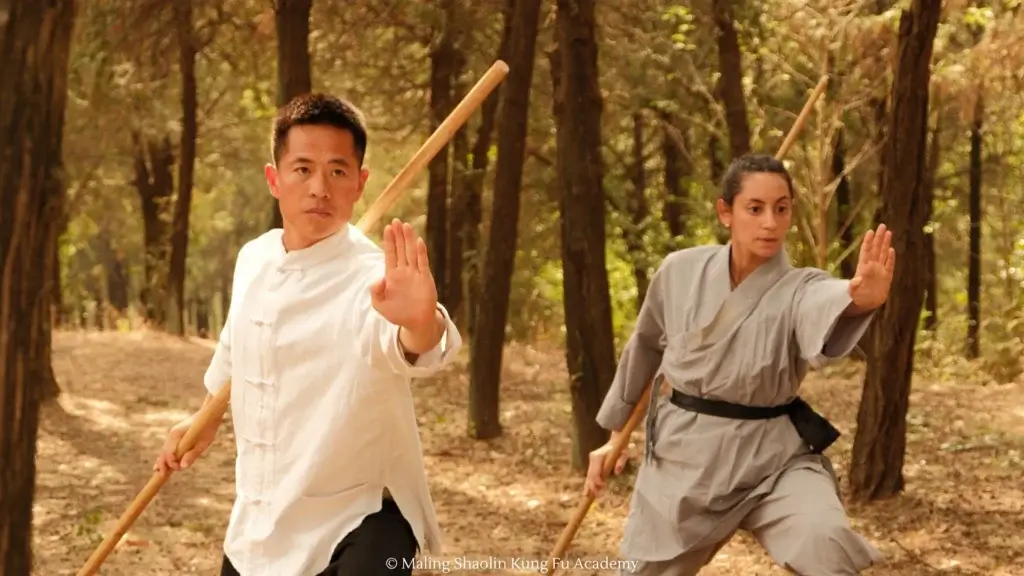
While senior students are the hands that guide and the shoulders that steady, the master remains the root of the school — setting the standard, safeguarding the lineage, and shaping the culture that seniors carry forward. Seniors help juniors, but never replace formal instruction; their role is to support, not to lead. They teach through example, not authority, learning as much from the act of guiding as beginners do from being guided.
This living chain — master to senior, senior to junior — is what keeps kung fu authentic, humble, and alive. In this way, the art is not only practiced, but passed on. Tradition is not preserved by preserving it in place, but by allowing it to breathe through people, generation after generation.
A true martial school is a family in motion.
We rise together.
We strengthen each other.
And in doing so, we honor the path that brought us here.
Martial Character & Morality
Interested to learn more about the values of Shaolin and kung fu? Check out our article “Wǔdé (武德): Martial Virtue as the Soul of Shaolin” to learn why the monks say: “One who has skill but no virtue is no disciple of Shaolin!”