

Introduction
Avatar: The Last Airbender (ATLA) introduced viewers to firebending as a fierce and dynamic art – a pyrokinetic ability to create and control flame. Firebenders like Prince Zuko and his sister Azula hurl blazing arcs and jets of fire with explosive power. But beneath the flash of flames lies a deep well of martial discipline, philosophy, and real-world inspiration. From Shaolin Kung Fu techniques to Daoist ideas of inner energy, firebending’s fantasy is rooted in genuine martial arts practice and spiritual wisdom. This deep dive will explore how Fire Nation characters embody (or violate) the principles of Wude (武德) – martial virtue – and how firebending’s inner discipline, breath control (气), and philosophy mirror real Chinese martial traditions. We’ll also see how the symbolism of fire in Chinese thought resonates in the story, and how historical parallels give Firebenders’ culture extra depth. Both kids and adults can appreciate how Avatar’s fiery art is more than flashy combat – it’s a lesson in self-mastery, balance, and the dual nature of power.
Spoiler Warning:
This article may contain detailed discussion of storylines, characters, and lore from Avatar: The Last Airbender, The Legend of Korra, and minor points related to the comics and novels. If you haven’t finished the series and wish to avoid spoilers, we recommend returning to this piece after watching both shows.

Fire.
“Fire is alive! It breathes, it grows. Without control, it will destroy everything in its path.”
-Jeong Jeong
Wude (武德): Firebending and Martial Virtue
When we think of Firebenders, the image of raging flames and aggressive attacks comes to mind. Yet, Uncle Iroh – the wise, tea-loving Fire Nation general – taught us that true firebending mastery begins with virtue and restraint. In Chinese martial culture, Wude (武德) means “martial morality” – a code of ethics and discipline every warrior should uphold. At its heart, Wude is about balancing one’s emotional mind (心, xīn) and wisdom mind (慧, huì) to achieve inner harmony. A Firebender’s strength is not measured by the size of their flames, but by the character and self-control they bring to their art.

Iroh embodies Wude. Despite being a famously powerful firebending master, he emphasizes humility, balance, and compassion. He gently guides Prince Zuko to temper his anger and pride, reminding him (and us) that “true power in firebending comes from inner strength, not brute force.” In the show, Iroh notes that raw strength or size doesn’t matter – the real source of firebending power is the breath and control within. This lesson isn’t just about technique; it’s a moral teaching. Iroh consistently counsels Zuko to choose honor and restraint over aggression, illustrating Wude’s core idea that a warrior’s first victory is over their own heart. The Confucian Doctrine of the Mean (中庸) parallels these teachings: it extols balance and avoiding extremes, holding that excess and deficiency are equally undesirable. Iroh’s philosophy echoes this – he advises Zuko not to let his emotions swing too far toward rage or despair, but to find a middle path of self-control and moral clarity.
Shaolin Kung Fu training historically placed ethics first, much like Iroh does. In Shaolin tradition, masters would ensure students developed strong ethics and mastered their temper and ego before learning lethal techniques. There’s a saying that “the practice of warrior ethics comes first”, meaning a true martial artist must cultivate virtue and self-discipline as the foundation of their skills. We see this with firebending: Jeong Jeong, the deserter Fire Nation admiral, refuses to teach Aang firebending at first because Aang lacks the emotional discipline and patience. Jeong Jeong fears the destructive potential of fire in undisciplined hands – a direct nod to the idea that without Wude, power corrupts. He tells Aang that fire is a wild, living element that “will spread and destroy” if not controlled by a steady mind.

The contrast between morally disciplined firebenders and those who abandon virtue is stark. Iroh and Zuko (after his transformation) use fire with enlightened purpose – as warmth, light, and protection. By contrast, Admiral Zhao and Princess Azula represent the lack of Wude. Zhao’s pride and Azula’s cruel perfectionism show no temperance; they seek domination at any cost. They can create massive flames, but their lack of inner virtue leads to self-destruction: Zhao’s aggressive firebending is turned against him by the ocean’s wrath, and Azula’s unstable psyche makes her flames erratic despite their blue intensity. Emotion without moral compass corrupts their fire – Azula’s blue fire, while hot, ultimately consumes her in madness. In Confucian terms, they “go to extremes,” utterly out of balance. Zuko nearly fell down that path, fueled by anger at the world, but under Iroh’s mentorship he learned that firebending’s highest form requires moral balance. By the end of ATLA, Zuko’s fire is no longer fueled by rage or the desire to prove himself; it’s fueled by a righteous intent to defend his friends and restore peace. This aligns with Wude’s ideal of “no extremity” (無極, Wújí) – a state of harmony where wisdom guides one’s passions. A true Firebender, therefore, is not one who burns brightest in anger, but one who burns steady and clear in spirit.
Conquer Yourself: Shaolin Wisdom on Anger and Inner Strength
A popular proverb in martial arts philosophy states: “To conquer others, you must first conquer yourself.” Nowhere is this more evident than in firebending. The Shaolin monks of legend trained not only their bodies but their minds, using meditation and repeated forms to tame the “inner flame” of emotion. Anger, fear, and hatred are like a fire within – if uncontrolled, they can consume the wielder. Firebending lore reflects a Buddhist mindfulness lesson: one must master the mind’s flame before it consumes you.

In ATLA, we see Zuko struggle with his inner anger throughout his arc. His firebending initially draws on rage and pain – an unstable fuel. In Book 3, when Zuko’s anger subsides and he joins the heroes, he ironically finds his firebending weakening. This isn’t because he’s gotten worse at fighting; it’s because his emotional source shifted. To rekindle his “inner fire” in a sustainable way, Zuko had to find inner peace and drive from a positive source. This is a very Zen idea: power must come from clarity and intent, not from destructive emotions. The Sun Warrior chief tells Zuko and Aang that fire is life, not just destruction, and that it should be fueled by the energy of the sun and the drive to sustain life, not anger. Zuko learning this lesson is essentially him conquering himself – acknowledging and letting go of his shame, anger, and turmoil, so that a purer flame can burn in him.
Shaolin training techniques historically included long hours of meditation and basic forms practiced ad nauseam. This wasn’t just for physical skill – it was to instill patience, focus, and humility. There is a Shaolin saying that a warrior should “endure hardship without letting ego interfere”. To endure many a bruising training session or meditative sunrise, a monk learns to let go of pride and impulsiveness. We can see a parallel in how firebenders practice breath control exercises and stances to center themselves. In one episode, Jeong Jeong makes Aang sit and breathe for hours before he’ll even let him spark a flame. The impatient Aang finds this boring – until he nearly burns Katara by accident and realizes why self-discipline is critical. This mirrors Chan (Zen) Buddhist practice at Shaolin: the mundane repetition of forms and breaths is actually training the mind not to “run wild.” Only a mind that can be still amid chaos can direct the chaos of fire.

Mindfulness is thus at the heart of mastering fire. The Buddha taught that holding onto anger is like “grasping a hot coal with the intent of throwing it at someone else – you are the one who gets burned.” Firebenders must learn this literally. We even see advanced Firebenders like Iroh practice a form of meditation – Iroh is shown calmly brewing tea, doing breathing exercises, or redirecting lightning with a slow, deliberate technique that requires absolute emotional control. Iroh’s ability to absorb and redirect lightning (a deadly firebending sub-skill) came from his study of waterbending philosophy, which emphasizes yielding and a calm mind. This mix of elements in his training underscores that a truly wise bender draws wisdom from all sources (as Iroh himself says) and is not ruled by pride or anger.
The “first and greatest victory is to conquer yourself,” Confucian and Buddhist sages agree. Zuko’s story in ATLA is essentially that principle in action. He had to conquer the self-doubt and rage inside to become the Fire Lord who would restore balance. Azula, who could not conquer her own mental instability and aggression, ultimately fell to herself. In one of the most visually striking sequences, Zuko and Aang perform the Dancing Dragon form before the original firebending masters (the dragons Ran and Shaw). As they move through the graceful, synchronized motions taught by the Sun Warriors, their breathing and heart rates synchronize with the dragons. This dance is as much a moving meditation as a fight: by the end, both youths are calm, centered – and then the dragons deem them worthy and envelop them in a rainbow of flame. It’s a brilliant metaphor for the idea that when you find inner equilibrium, the external power (fire) will come naturally and harmoniously.

Finally, consider how Iroh handles power. Despite his nickname “Dragon of the West” and his capability to breathe fire, he rarely loses his temper. When he does unleash his full power (like breaking out of Ba Sing Se’s prison), it’s controlled, purposeful – righteous. He never lets hate consume him; even toward his enemies, he shows sorrow or hope for redemption (as with Zuko). This compassionate mindset reflects Buddhist metta (loving-kindness) in a way: Iroh conquered the fire of hatred in himself, and thus he wields the literal fire with enlightened control.
In summary, firebending teaches that before you can master the flame in your hand, you must tame the flames in your heart. Through patience, meditation, and self-reflection – the same tools actual Shaolin monks use – firebenders learn to steady their minds. First, conquer yourself; then, you may conquer the world. It’s a lesson as applicable in real life as it is in fantasy.
Qi (气) and the Breath of Fire: Internal Energy in Firebending
One of the first lessons Aang receives in firebending is from Jeong Jeong: “Breath is the fuel of firebending.” In ATLA, firebenders generate their element from their own chi (气) – their life energy – catalyzed by controlled breathing. This concept has deep roots in Chinese martial arts. In Mandarin, qì (气) literally means air or breath, but figuratively it means life force or energy flow. Firebenders are essentially turning their breath and willpower into flame, echoing real practices of qigong (energy cultivation) and nèigōng (internal skill) in Kung Fu.
Internal martial arts in China (like Tai Chi and Xingyi) place heavy emphasis on the dantian – the “elixir field” in the lower abdomen where qi is stored and generated. Firebenders, too, seem to draw power from their core. Think of how Zuko and Azula take a pronounced deep breath from the belly before releasing a fire blast. Master Iroh explicitly says breath control is the source of true power. This mirrors the idea that a martial artist with strong dantian breathing can deliver punches or kicks with explosive force (a concept known as fājìn), or in a firebender’s case, deliver a gout of flame with explosive heat.

The breath of fire technique we see Zuko use (to warm himself on the frozen Earth Kingdom tundra) is straight out of real Qigong practice. In Qigong, there are exercises where controlled breathing is used to circulate warmth and energy through the body. In ATLA, Zuko’s “breath of fire” warms his body by “keeping the flames alive in his lungs,” showing that through breath and will, firebenders can regulate their inner temperature. This is analogous to Tibetan tummo meditation or Daoist breathing arts (tǔnà, 吐纳) aimed at stoking an “inner fire.” It’s fascinating that a children’s fantasy show incorporated such a subtle reference to internal energy work!
Daoist internal alchemy goes even further. It describes transforming the very energies within the body in a sequence: essence (精, jīng) → qi (气) → spirit (神, shén). The imagery is often of lighting an inner fire in a crucible, refining raw essence into pure energy, then into enlightened spirit. A firebender’s training can be seen as a simplified, fictionalized version of this. Zuko had to refine his inner drive (from the coarse “fuel” of anger to the refined “fuel” of purpose and righteousness). This is much like a Daoist adept refining crude materials into the “elixir” of immortality – metaphorically turning base impulses into spiritual strength. Daoist texts speak of the inner furnace where you cook the lower emotions to extract the pure qi and shen; in ATLA, Zuko’s literal fire went out of control until he “cooked” his anger down and found a calmer source. Only then could he create sustained, consistent fire without rage. It’s a beautiful parallel to the idea of nurturing life by balancing the inner fire, rather than letting it burn unchecked and deplete you.

Moreover, the concept of Ming Men or “Gate of Life” in Chinese medicine refers to an inner fire in the kidneys that sustains vitality. One Daoist practice is to keep that fire (which is yang) and the heart’s fire in balance with the body’s water (yin). In a similar way, firebenders need to balance their internal heat with calmness. Breathwork (吐纳) in Chinese literally means “exhale and inhale” and is a synonym for energy cultivation. So every time we see a firebender inhale deeply through the nose, sink their stance, then punch forward exhaling flame, we’re essentially seeing a mini Qigong exercise. The breath becomes energy in the body, the energy extends past the limbs and becomes fire – exactly as Jeong Jeong described to Aang during training.
Interestingly, Lightning generation, a rare firebending technique, is explained by Iroh as separating the energies of yin and yang within oneself – a very internal, almost meditative skill. He warns Zuko that any emotional turmoil will cause the energy to rebound and harm the user. This is again a reference to inner balance: only a person who is mentally and energetically neutral (emotionless, focused) can channel lightning. That idea is reminiscent of high-level Qigong masters being able to direct bioelectric energy (some tales even speak of setting paper on fire with concentrated qi). While fantastical, it underscores that firebending prowess grows with internal cultivation. A calm heart and concentrated mind can even tame lightning, the “cold-blooded fire.”

In summary, firebending draws from the martial principle that breath and inner energy are the wellspring of power. The flame a firebender creates is an extension of their Qi. This is why Sozin’s Comet, which infuses the atmosphere with solar energy, boosts firebenders – it’s essentially flooding their “chi reservoirs” with extra fuel. But absent such external boosts, a firebender’s strength comes down to how well they can harness their internal furnace. As one martial arts source puts it, Northern Shaolin’s speed and power come from a balance of breath and movement – firebending adopts the same approach. Every punch and kick is synchronized with an inhale or exhale, every fiery strike born from an inner rhythm.
To a real Kung Fu practitioner, these ideas are familiar: focus your breath (qi) in your dantian, channel it with intent, and explosive force results. In ATLA, focus your breath in your belly, channel it with will, and explosive fire results. Fantasy as it may be, firebending beautifully captures the spirit of internal martial arts training, where the loud, visible power always starts from silent, invisible breath.

Fire’s Big Idea in 30 Seconds (Yin–Yang & Wuxing)
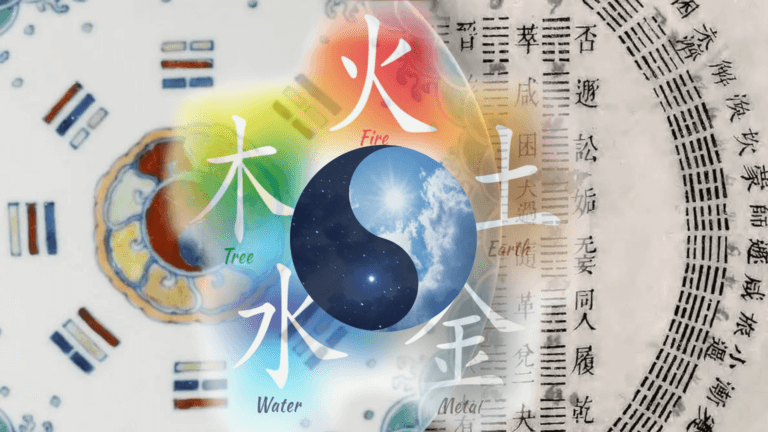
Fire is the most yang element—heat, activity, expansion—and it needs yin (cool, calm, receptive) to keep it from scorching rather than sustaining. In the Five Elements, Fire corresponds to summer, the heart, joy, and transformation: in balance it gives warmth and clarity; in excess it flips to restlessness, impulsivity, and even hatred. In practice, the flame should be fueled by breath and purpose, not anger—Zuko’s power stabilizes once he replaces rage with resolve, and the Sun Warriors teach that “fire is life.” Visually, the dragons spiraling around Aang and Zuko form a living taijitu, showing that true power ignites where opposites harmonize. The training takeaway is simple: a strong exhale drives power; a soft inhale restores balance—firebending is a rhythm of surge and settle. For a complementary lens on how yin cools the “heart fire,” see our Waterbending deep dive: The Real Martial Arts and Healing Philosophy Behind Waterbending in Avatar: The Last Airbender.
Northern Shaolin Origins: The Real Kung Fu Behind Firebending
It’s no coincidence that firebending combat looks like a Kung Fu sequence. The creators of ATLA worked with martial arts experts (notably Sifu Kisu) to base each bending style on a real-world Chinese martial art. Firebending’s core choreography comes from Northern Shaolin Kung Fu (北少林). Northern Shaolin is famous for its aggressive, long-range techniques – powerful kicks, extended punches, flamboyant acrobatics – which fits fire’s expansive, yang nature. If you watch Zuko or Azula fight, you’ll notice high forward kicks, deep stances, and rapid fist combinations that are hallmark traits of Northern Shaolin style.
Northern Shaolin emphasizes reaching far and hitting fast. One principle is “kicking over hand fighting,” meaning legs are used to their fullest reach without compromising balance. Firebenders adopt this by favoring wide stances and frequent kicks – think of how often a firebender blasts flame from a kicking motion versus, say, a waterbender who uses mostly arm movements. The style is external and powerful, using momentum and whole-body extension to “explode through the opponent.” This is visually reflected in how firebenders generate bursts of flame that surge outward in straight lines or arcs, mirroring a Northern Shaolin fighter’s aggressive linear strikes.

While Northern Shaolin is a traditional family of temple-linked systems, Changquan refers to the performance-oriented “Long Fist” of contemporary Wushu, a synthesis influenced by northern styles such as Chaquan, Huaquan, and Paoquan. It is distinct from Northern Shaolin but shares the northern flavor: long lines, athletic footwork, aerials, and extended combinations. On screen, some of firebending’s aesthetic—the crisp lines, leaping entries, and flowing links between techniques—reads very much like modern Changquan vocabulary, which dovetails naturally with Northern Shaolin’s long-range, yang-forward attitude. Think of Changquan here as an athletic amplifier: not the root of firebending, but a visible influence on its posture, pacing, and showy transitions.
But firebending’s martial influences don’t stop here. The show’s fight choreography weaves in a fusion of styles to give each character and situation a unique flavor. Northern Seven Star Praying Mantis techniques are sprinkled into firebending’s repertoire. The Praying Mantis style is known for quick, successive strikes and rapid hand movements, often overwhelming an opponent in a flurry – much like how a firebender might send rapid-fire jabs of flame in succession. These momentary bursts of extreme power in mantis style (often described as ging or short explosive force) resemble explosions, which is a perfect parallel to firebending ethos. In fact, that offensive mindset – “strike first, strike fast, overpower” – leads observers to call firebending the most aggressive bending art.

Two Mantises, Two Elements: Why Fire Uses Northern Mantis and Earth (Toph) Uses Southern Mantis
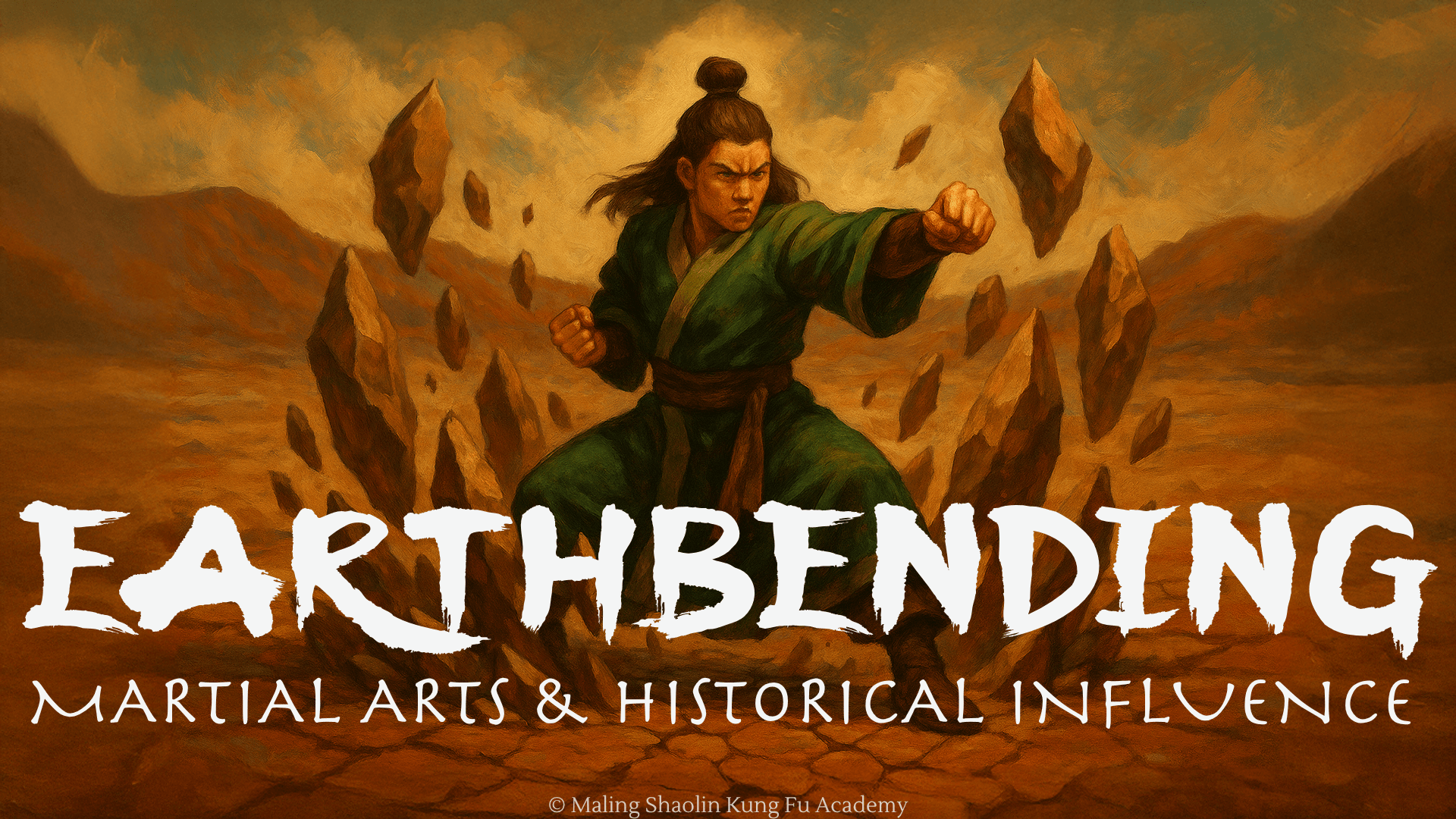
In Avatar, the “mantis” family splits cleanly along elemental lines. Firebending borrows from Northern Seven Star Praying Mantis, a long-bridge style built for mid-to-long range pressure: fast chaining flurries, hooking mantis hands to catch and hit, agile footwork that keeps advancing, and bursts of ging (explosive short power) that read like mini-explosions—perfect for rapid-fire jabs of flame. It’s outward, extroverted, and distinctly yang, like heat expanding to overwhelm. By contrast, Toph’s earthbending draws on Southern Praying Mantis (Chow Gar/Chu Gar/Jook Lum), a short-bridge, close-quarters art that lives on contact and sensitivity: low, rooted stance; shocky inch-power from a compact frame; “sticky” forearms and hands that feel an opponent’s intent before unleashing rapid chops, finger jabs, clawing grabs, and elbows. It uses almost no high kicks, keeping the feet glued to the ground—ideal for Toph’s seismic sense—and the show even modeled her movement on Sifu Manuel Rodriguez’s Southern Mantis. In one sentence: Northern Mantis reaches and overwhelms—fire’s nature; Southern Mantis roots and reads—earth’s nature.
Another style referenced is Southern Dragon Style Kung Fu (Lóng Xíng Mó Qiáo, 龍形摩橋), sometimes called Lung Ying. This style, fittingly based on the movements of a mythical dragon, is used in close-quarters firebending. Dragon style involves twisting body motions and a signature “dragon claw” hand form for seizing and redirecting force. In ATLA’s Book 3 episode “The Firebending Masters,” Zuko and Aang learn a ceremonial firebending form from the Sun Warriors which the animators modeled on a traditional Southern Dragon form – the Dancing Dragon. The statues and mosaics in the Sun Warrior ruins depict a figure in dragon-like postures, and the form includes coiling arm movements and synchronized steps much like Lung Ying Kung Fu. The dragon style’s focus on close-range techniques and circular motions complement Northern Shaolin’s long strikes, giving firebenders a well-rounded arsenal. For example, when Zuko redirects lightning or Azula counters an opponent’s attack at close range, you can spot a bit of that dragon-like bridge-hand technique (forearm parries and claw-like grabs) in action.

Yet another influence comes from the Long Fist family and its derivatives. Chaquan and Mizongquan (a.k.a. Lost Track style) have been noted by fans as resembling firebending footwork due to their mix of swift strikes and agile evasions. Indeed, Azula’s fighting style in the show is slightly more precise and stance-oriented, which some attribute to her incorporating a bit of Chaquan (known for its elegant, elongated movements). The animators gave her a very controlled grace to match her personality – she’s less wild in motion than Zuko, reflecting a disciplined northern style with a touch of something like Xingyiquan. Notably, Xingyiquan (形意拳) is a style built on straight-line attacks and the concept of the “Five Elements.” Some sources even mention that Xingyiquan’s principle of using the body’s “seven stars” (hands, feet, elbows, knees, hips, shoulders, head) is incorporated into firebending fundamentals. That means firebenders utilize every limb and joint as a weapon – visible when Azula throws kicks, punches, elbow jabs, and even head movements in a seamless flurry.
Put together, these influences mean firebending is a composite style: primarily Northern Shaolin in spirit (dynamic, powerful, high kicks), with dashes of Northern Praying Mantis (rapid-fire flurries), Changquan/Long Fist athleticism (extended lines, acrobatic links), Southern Dragon close-quarter techniques, and occasional Xingyiquan-like directness. The result is what we see on screen: a firebender’s form is strong and offensive, yet at times surprisingly graceful and fluid when they need to dodge or manipulate an opponent. Zuko and Azula’s Agni Kai duel in the series finale is a great showcase: their movements are like mirror images of a Northern Shaolin set, full of spinning kicks and extended punches, but we also see tight parries and counter-strikes when they get in close (a nod to Dragon style’s clawing and seizing). The intensity of their fight – set against a raging backdrop of flame – truly feels like watching two Kung Fu prodigies in a temple duel, each motion steeped in martial arts pedigree.

For viewers unfamiliar with these styles, none of this detracts from the excitement – but it does give a subconscious authenticity. Those who have studied Kung Fu often smile at how well ATLA translated real forms into bending moves. For example, the horse stance (a low, wide stance common in Shaolin) is frequently used by firebenders to root themselves before unleashing a big attack, emphasizing stability and power from the ground. The animators even included little flourishes like flicking kicks (common in Northern styles) to start a flame arc, and sweeping leg motions to create wide flame whips. All these come from Kung Fu cinema and practice.
Ancient Inspirations: Fire Nation’s Empires and Ethics
The Fire Nation’s story in ATLA borrows elements not just from Chinese philosophy but also from real historical empires. In many ways, the Fire Nation mirrors Imperial Japan during the late 19th and early 20th centuries – an island nation that rapidly industrialized and set out to conquer its neighbors. At the same time, it evokes aspects of ancient Chinese dynasties like Qin and Han in terms of unification ambitions, strong central rule, and technological prowess. These historical parallels add a layer of realism and moral complexity to the Firebenders’ narrative.

Imperial Japan Parallels: Culturally and geopolitically, the Fire Nation is heavily inspired by Japan. It’s a volcanic archipelago with a central authority on the largest island, just as Japan’s main island (Honshu) holds Tokyo. Both Fire Nation and Imperial Japan built formidable navies to expand overseas. In ATLA, the Fire Nation’s navy enables it to project power across the world, much like Japan’s navy allowed it to colonize parts of East and Southeast Asia. The timeframe of the Fire Nation’s tech – including steamships, airships, and rudimentary tanks – is analogous to Japan’s Meiji Restoration era (late 1800s) when Japan rapidly adopted Western industrial technology. In ATLA, within a single century, the Fire Nation moves from traditional ships to ironclad warships and mechanized engines, a trajectory similar to Japan’s astonishing industrial growth. The first Sino-Japanese War (1894-1895) saw Japan attack Qing Dynasty China for influence and resources; likewise, the Fire Nation targeted the Earth Kingdom (the ATLA equivalent of China) for its rich land and coal, launching a war that clearly mirrors those imperialist motivations.
Ideologically, the Fire Nation’s propaganda – teaching its children that the war was a noble effort and minimizing the atrocities – is a direct nod to Japan’s censorship of its WWII history. In the show, when Aang attends a Fire Nation school, he’s shocked by a textbook that glorifies Fire Lord Sozin’s expansion as bringing prosperity, glossing over the genocide of the Air Nomads. This is parallel to how Japanese textbooks often downplayed events like the Nanjing Massacre. Indeed, as one analysis notes, “both Japan and the Fire Nation censor their past atrocities”, keeping their citizens ignorant of the true horrors committed. The Fire Nation’s high nationalism and talk of cultural superiority (“bringing enlightenment to lesser nations”) also echoes Imperial Japan’s rhetoric of the “Greater East Asia Co-Prosperity Sphere.” Avatar doesn’t shy away from these heavy themes: nationalism, imperialism, and racism are explored through the Fire Nation’s attitudes. Fire Nation characters like the headmaster or Ozai genuinely believe their nation has a manifest destiny to rule. This gives a very real-world weight to the bending wars, making the fantasy conflict an allegory for real ethical issues nations have faced.

Qin and Han Dynasty Echoes: Looking at ancient China, the Qin Dynasty (3rd century BCE) was the first to unify the warring states into one empire – a feat achieved through military might, advanced weaponry, and strict legalist rule. Fire Lord Sozin, in initiating the Hundred Year War, had a similar ambition of unifying the world under Fire Nation rule (as revealed in ATLA’s backstory). Like Qin, Sozin believed in strong centralized control and saw it as bringing a sort of order (however self-serving it was). The Fire Nation also developed superior weaponry – for example, their inventors create drilling machines, iron ships, and air balloons. Qin China likewise was ahead of its rivals in technology: they had mass-produced iron swords and crossbows that gave them an edge. There is a famous terracotta army buried with the First Emperor, with each soldier equipped with bronze swords so well-made some still gleam today. We can compare that to the Fire Nation’s assembly-line fabrication of war machinery – both depict how mastering the element of fire (for smelting and industry) can translate to military dominance. As one historian might put it, “fire and metallurgy revolutionized warfare in ancient China” – iron weapons were to Qin what iron warships are to the Fire Nation: game-changers.
The Han Dynasty (206 BCE – 220 CE) that followed Qin is known for consolidating and somewhat softening the empire with Confucian values. Interestingly, Fire Lord Zuko’s reign resembles a Han-like reformation after a brutal Qin-like conquest. He ends the war, strives to treat former enemies with respect (recall him freeing the Earth Kingdom prisoners and working with Avatar Aang to rebuild), and presumably promotes more ethical governance. Han China also dealt with integrating diverse cultures after Qin’s conquests, just as Zuko must reconcile Fire Nation colonials with Earth Kingdom citizens (a major plot in the comics). The Fire Nation colonies in the Earth Kingdom are reminiscent of how Han settlers moved into newly conquered regions. Zuko’s decision in the comics to let those colonies evolve into a new state (the United Republic, leading into Legend of Korra) shows a nuanced understanding that you can’t just dominate by force – you need balance and inclusion, a very Confucian Han-like stance.

Ancient Military Ethics – The Art of War: The Fire Nation’s militarism invites discussion of Sun Tzu’s Art of War, the classic Chinese military treatise. Sun Tzu advocates cunning, strategy, and economy of force – “He will win who knows when to fight and when not to fight,” and “Supreme excellence is subduing the enemy without fighting.” One could argue Iroh, as a general, embodies some of this wisdom. He famously laid siege to Ba Sing Se for 600 days but then withdrew after his son’s death. One might interpret that not just as grief, but as Iroh realizing the futility of needless carnage. Sun Tzu said “No nation benefits from prolonged war” and “A leader leads by example, not by force.” Iroh living in the Earth Kingdom as a simple tea-shop owner, kindly serving even those who were technically his enemies, is him leading by moral example. When he later leads the Order of the White Lotus to liberate Ba Sing Se from Azula’s rule, he strikes only because it’s absolutely necessary to free the city (and he does so with minimum collateral damage). Ozai, by contrast, violates every Art of War maxim – he blatantly relies on overwhelming force, he fights out of anger and desire for glory (Sun Tzu: “no general should fight a battle simply out of pique”), and he does not know when to stop (thus nearly losing everything when Aang defeats him). The contrast between Iroh and Ozai is like the contrast between a philosopher-general and a tyrant. One follows an unwritten code of honor in war (like respecting the balance of elements, valuing life) and the other pursues total victory regardless of cost.
It’s also worth noting that the Fire Nation, like many historical empires, experiences internal dissent and ethical qualms. Just as ancient Chinese records mention generals who refused orders they found dishonorable, we have characters like Jeong Jeong (who deserted because he disagreed with the war’s morality) and Iroh (who eventually saw the war was wrong and joined the White Lotus). Their presence shows that even within the aggressive nation, the concept of yì (義) – righteousness – still lived. This echoes the “Martial Virtue” (Wude) concept discussed earlier, but on a societal scale: some Fire Nation members retained a sense of moral duty over blind loyalty. In Chinese tales, such righteous generals or warriors are lauded (think of General Guan Yu from the Three Kingdoms, revered for loyalty and righteousness). In the Avatar universe, Iroh becomes that kind of figure – beloved by his troops and later by common folk (as seen in Korra era) because he stood for something more than conquest.

Japanese Aesthetics and Beyond: The Fire Nation’s aesthetic – sharp, angular armor with a menacing faceplate, and the Fire Lord’s title – also has cross-cultural nods. The armor of Fire Nation soldiers resembles a mix of Chinese lamellar and Japanese samurai armor (especially their early helmet designs with slight flares, which in an unaired pilot were even more blatantly samurai-like). The Fire Lord’s throne room, however, has a very Chinese imperial feel (red pillars, draconic imagery). This blend underscores that the Fire Nation isn’t just “Japan with firebending” but an amalgam of East Asian imperial imagery. Even the Fire Sages, with their ritual and temple, evoke Japan’s fire kami priests and China’s imperial cult attendants. Meanwhile, the Order of the White Lotus attacking the Fire Nation’s Old Capital in the finale, with waterbenders and earthbenders, felt like “the world’s response” akin to the Allied powers in WWII converging on Japan – a stretch, but one fans sometimes note. At the end, Zuko’s coronation brings back harmony, reminiscent of how in real history, after periods of war, countries had to restore diplomatic balance.

Fire and Industry: A final parallel to draw is the idea that “fire is the first tool of civilization.” In real history, when humans learned to make and control fire, it led to cooking (better nutrition), then pottery, then metallurgy – each a leap in technology and society. The Fire Nation embodies this human mastery of fire and metal. They are the first to develop factories and forges on a grand scale. In ATLA, we see a gigantic metal drill besieging Ba Sing Se – a triumph of engineering fueled by coal and fire – a scenario right out of the Industrial Revolution playbook (imagine the British Empire’s steam-powered gunships, or Japan’s modernized army battering old walled cities in Asia). There’s symbolism in that the Fire Nation’s elemental prowess gave them confidence to dominate nature (they literally try to burn a vast Earth Kingdom forest in Book 3, an ecological disaster akin to real wartime scorched-earth tactics). It took the Water Tribe (water = nature, life) and Earth Kingdom (earth = stability, home) joining with the Avatar to quell that destruction, almost like the world uniting to address an out-of-control industrial tyrant.
In essence, the Fire Nation’s rise and fall in Avatar is a commentary on the ethical balance of power and technology. The ancient military ethics of Sun Tzu and the virtues of Wude implore moderation and wisdom in the use of force. The Fire Nation ignored those in favor of might-makes-right – and nearly destroyed the world and themselves (“a kingdom that has once been destroyed can never come again into being; the dead can never be brought back to life,” Sun Tzu warned). In the end, it’s fitting that Aang, adhering to an ancient Air Nomad philosophy of non-killing, defeats Ozai not by annihilation but by removing his firebending. This ultimate act of restraint – sparing an enemy – brings the Fire Nation full circle back to balance. It’s as if the universe imposed the Art of War’s ideal victory (subdue without killing) upon Ozai.
The Firebenders’ journey, from Sozin to Zuko, thus encapsulates a cycle seen in many empires: fiery ascent through strength, moral decay with unchecked aggression, and finally a reevaluation of values when faced with ruin. By blending these historical and cultural echoes, Avatar makes the Fire Nation’s story both exciting and educational. Adults catch the parallels to real history, while younger viewers learn (subtly) that even “the bad guys” come from a complex culture with proud martial traditions and that honor can be regained through doing what is right, not merely by winning battles. As Iroh might say over a cup of ginseng tea, “History is like a fire – if you don’t learn to control it, it will consume you.” The Fire Nation learned to control their fire just in time, and in doing so, earned a place in a renewed, balanced world.
Avatar: Bending Styles & Weapons
Interested to learn more about “Avatar: The Last Airbender”? Check out our article “The Exact Martial Arts Styles Behind Avatar: The Last Airbender Bending” to learn about the Chinese Martial Arts Styles, Weapons, and Philosophy within the show!